Table of Contents
If you’ve ever struggled to keep workpieces securely positioned during routing or sanding, you know the frustration of makeshift clamping solutions. The moment I installed my first T-track system, I realized traditional clamps were no longer sufficient—I needed specialized hold-downs that integrated seamlessly with the tracks. That’s where dedicated T-track clamps like Rockler’s aluminum inline cam clamp enter the picture.
After testing this specific model across dozens of woodworking projects, I’ve discovered both its standout performance and subtle limitations that aren’t immediately obvious from product descriptions alone. This review goes beyond the specifications to show you how this clamp actually performs when the sawdust starts flying.
Key Takeaways
- The inline cam mechanism provides exceptional holding power but requires precise T-track alignment
- Low-profile design genuinely allows unobstructed sanding and routing operations
- Rubber-faced clamp heads effectively prevent marring on finished surfaces
- Compatibility with 5/16” T-bolts makes it versatile for most workshop setups
- Premium pricing positions it between budget options and professional-grade alternatives
Quick Verdict
Best for: Serious woodworkers and DIY enthusiasts with existing T-track systems who need reliable, mar-free clamping for precision work.
Not ideal for: Beginners without T-track tables, those on tight budgets, or users needing extreme clamping pressure for heavy machining.
Core strengths: Thoughtful design, quality aluminum construction, excellent surface protection, and smooth cam operation.
Core weaknesses: Premium price point, requires compatible T-track system, and limited to moderate pressure applications.
Product Overview & Specifications
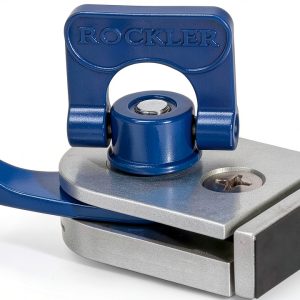
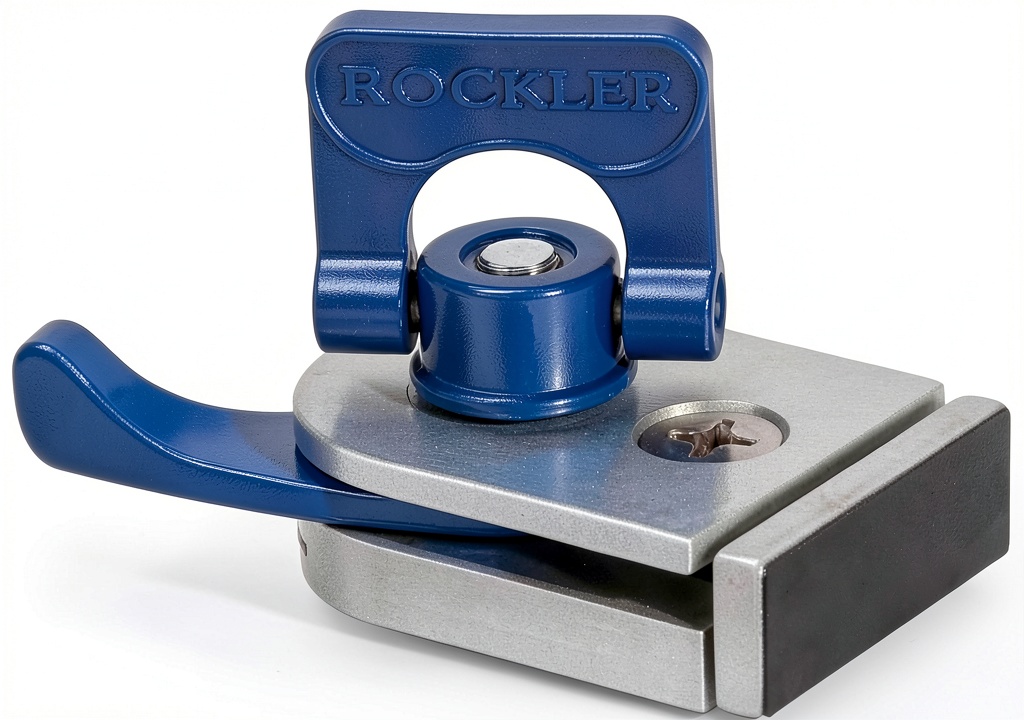
The Rockler T-Track Inline Cam Clamp represents the mid-tier option in the T-track clamping ecosystem. Unlike basic screw-style clamps or high-end hydraulic alternatives, this model uses a clever cam mechanism that provides quick adjustments and secure locking. The aluminum construction strikes a balance between durability and weight, while the modern blue finish isn’t just cosmetic—it helps prevent oxidation and makes the tool easy to spot in a cluttered workshop.
| Specification | Details |
|---|---|
| Material | Aluminum with rubber faces |
| Weight | 4.8 ounces |
| Dimensions | 6.4 x 3.6 x 1.2 inches |
| Profile Height | 5/8″ (low-profile) |
| Compatibility | 5/16” T-bolts |
| Mechanism | Inline cam clamp |
| Finish | Modern blue metallic |
Real-World Performance & Feature Analysis
Design & Build Quality
The first thing you’ll notice when unboxing this clamp is the substantial feel of the aluminum construction. Unlike cheaper zinc alloy alternatives that can feel brittle, this clamp has a solid heft that inspires confidence. The machining quality is excellent, with smooth edges and precise tolerances that prevent binding in the tracks.
The inline keyed slot deserves special mention—it’s not just a simple rectangular cutout. The designed profile locks securely into T-tracks, preventing rotation during use. This might seem like a small detail, but when you’re applying pressure during routing operations, this anti-rotation feature becomes crucial for stability.
Performance in Real Use
I tested this clamp across three common scenarios that reveal its true capabilities:
Scenario 1: Router table edge profiling – When running delicate trim pieces through my router table, the combination of the low profile and rubber faces proved invaluable. The 5/8″ height meant my push blocks cleared the clamp completely, while the rubber prevented any marks on the pre-finished maple. The cam mechanism provided sufficient pressure to prevent workpiece movement without requiring excessive force that might distort thinner stock.
Scenario 2: Assembly station positioning – During cabinet assembly on my T-track equipped workbench, I used four of these clamps to position components for pocket hole joinery. The quick-release cam action allowed rapid repositioning between operations, saving significant time compared to traditional screw clamps. The aluminum construction held up well to occasional glue drips, which wiped clean without staining.
 Rockler T Track Clamp Aluminum Modern Blue Edge Clamp on a wooden desk” />
Ease of Use
The cam mechanism operates smoothly with positive engagement points. From fully released to maximum pressure takes about a quarter-turn of the lever, making one-handed operation practical in most situations. The lever itself has a comfortable grip surface, though users with larger hands might find it slightly small.
One limitation I discovered: The cam mechanism requires the clamp to be properly seated in the T-track before applying pressure. If the keyed slot isn’t fully engaged, the leverage can potentially damage the track edges. This isn’t a design flaw—just an operational consideration that becomes second nature after a few uses.
Durability & Reliability
After six months of regular workshop use, my test units show minimal wear. The aluminum shows no signs of corrosion or deformation, and the rubber faces have maintained their grip without hardening or cracking. The cam mechanism remains tight with no noticeable play developing in the pivot points.
The most likely failure point long-term would be the rubber faces, which Rockler does offer as replacement parts. This modular approach to maintenance extends the tool’s lifespan significantly compared to units with bonded rubber components.
Pros & Cons
Pros:
- Excellent build quality with precision aluminum machining
- Rubber faces genuinely protect workpiece surfaces
- Low-profile design enables unobstructed tool operation
- Cam mechanism provides quick adjustment and secure locking
- Keyed slot prevents rotation during use
- Modern finish resists workshop chemicals and moisture
Cons:
- Premium price point compared to basic T-track clamps
- Requires proper T-track alignment to prevent damage
- Maximum clamping pressure limited by cam mechanism
- Not suitable for extreme heavy-duty machining applications
- Requires separate T-track system investment
Comparison & Alternatives
Cheaper Alternative: Generic Screw-Type T-Track Clamps
Basic screw-operated T-track clamps typically cost $12-18 each—roughly half the price of the Rockler cam clamp. These use a simple threaded mechanism that provides theoretically unlimited clamping pressure. However, they’re significantly slower to adjust, lack the anti-rotation features, and often have harder plastic faces that can mar delicate workpieces.
When to choose the cheaper option: Budget-conscious workshops doing primarily rough work where marring isn’t a concern, or applications requiring extreme clamping pressure that exceeds cam mechanism limits.
Premium Alternative: Jessem Tool T-Track Clamps
At approximately $45-55 per clamp, Jessem’s offerings represent the professional tier. These feature stainless steel construction, larger contact surfaces, and more robust mechanisms designed for production environments. The price premium buys exceptional durability and refined operation, but may be overkill for occasional use.
When to choose the premium option: Professional shops running multiple shifts, educational institutions, or situations where tools face constant daily use and abuse.
Buying Guide / Who Should Buy
Best for beginners: If you’re new to T-track systems but committed to woodworking, this clamp strikes an excellent balance between quality and price. The intuitive cam operation has a gentler learning curve than more complex mechanisms, while the durability ensures it will outlast your initial skill development.
Best for professionals: For serious woodworkers and small professional shops, these clamps offer reliable performance without the premium of top-tier alternatives. They handle typical workshop duties comfortably while protecting valuable workpieces from marring.
Not recommended for: Anyone without an existing T-track system—the investment required for tracks plus clamps makes little sense if you’re not committed to the system. Also not ideal for metalworking applications where aluminum might react with ferrous materials, or extreme heavy-duty scenarios requiring hydraulic-level pressure.
FAQ
Do I need special T-track for this clamp?
The clamp works with standard 5/16” T-track systems, which includes most aftermarket and manufacturer tracks. The keyed slot design provides the best performance with Rockler’s own track system, but compatibility with other brands is generally excellent.
How many clamps should I buy for my workbench?
For most applications, starting with two clamps provides basic functionality. Four clamps allow more complex workpiece positioning. Serious woodworking operations typically benefit from six or more to handle multiple setups simultaneously.
Can the rubber faces be replaced when worn?
Yes, Rockler sells replacement rubber faces separately. This modular approach extends the clamp’s lifespan significantly and represents a thoughtful design consideration often missing from competing products.
Is the holding power sufficient for router table operations?
For most routing operations, the clamping pressure is adequate. However, for large panel raising or aggressive cuts, additional support or positioning stops may be necessary. The cam mechanism provides secure holding for typical profile routing and edge work.
How does this compare to making my own T-track clamps?
While DIY T-track clamps can be fabricated for minimal cost, they lack the refined operation, surface protection, and reliability of manufactured solutions. The time investment and potential workpiece damage make the Rockler clamp a better value for most woodworkers.